Client: 73Strings
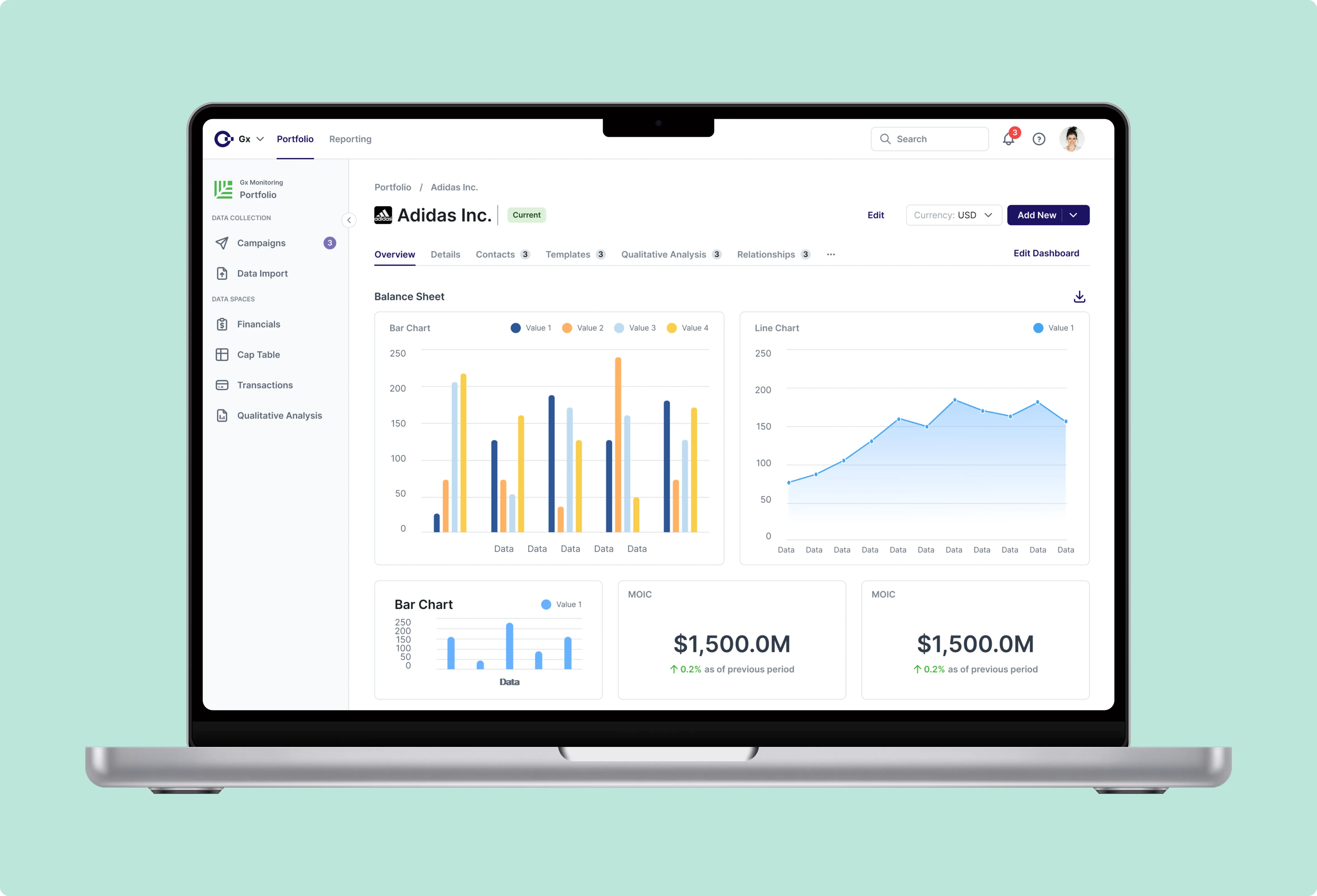
73Strings is a SaaS fintech platform that helps investment professionals manage, evaluate, and monitor private market portfolios. The platform handles highly complex, data-driven workflows where accuracy and clarity are critical.
As part of the design team, I contributed to shaping user flows, designing intuitive data visualizations, and building a scalable design system to support future product growth. Our goal was to transform scattered, spreadsheet-based processes into a seamless digital experience that enables investors to make faster, more informed decisions.
- Complex workflows: Analysts and data teams relied on fragmented, manual processes that slowed adoption.
- Disjointed experience: Without a shared design system or component library, each module felt inconsistent, frustrating users and creating inefficiencies.
- Sales friction: The platform’s potential was overshadowed by poor usability, limiting client confidence during demos.
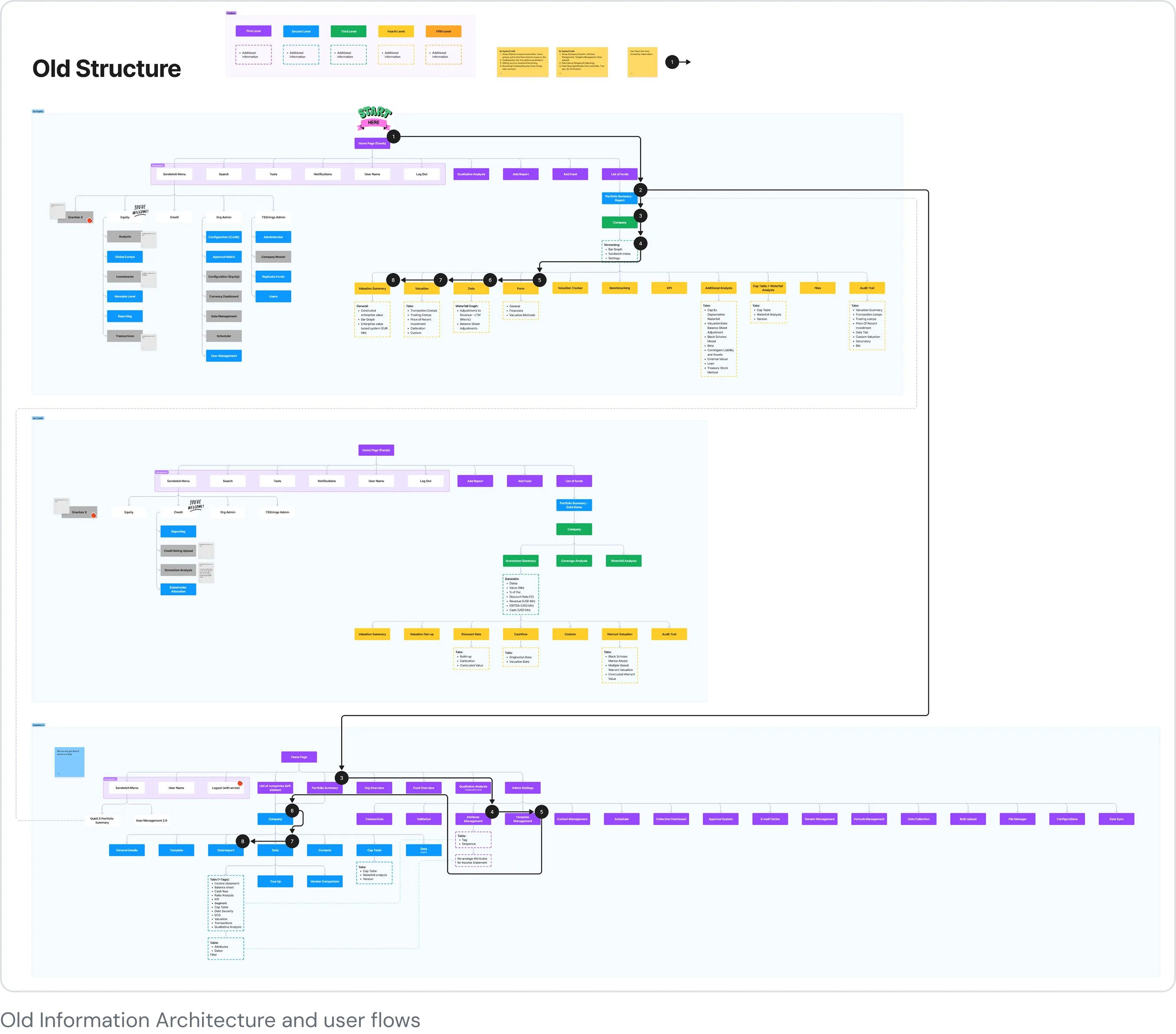
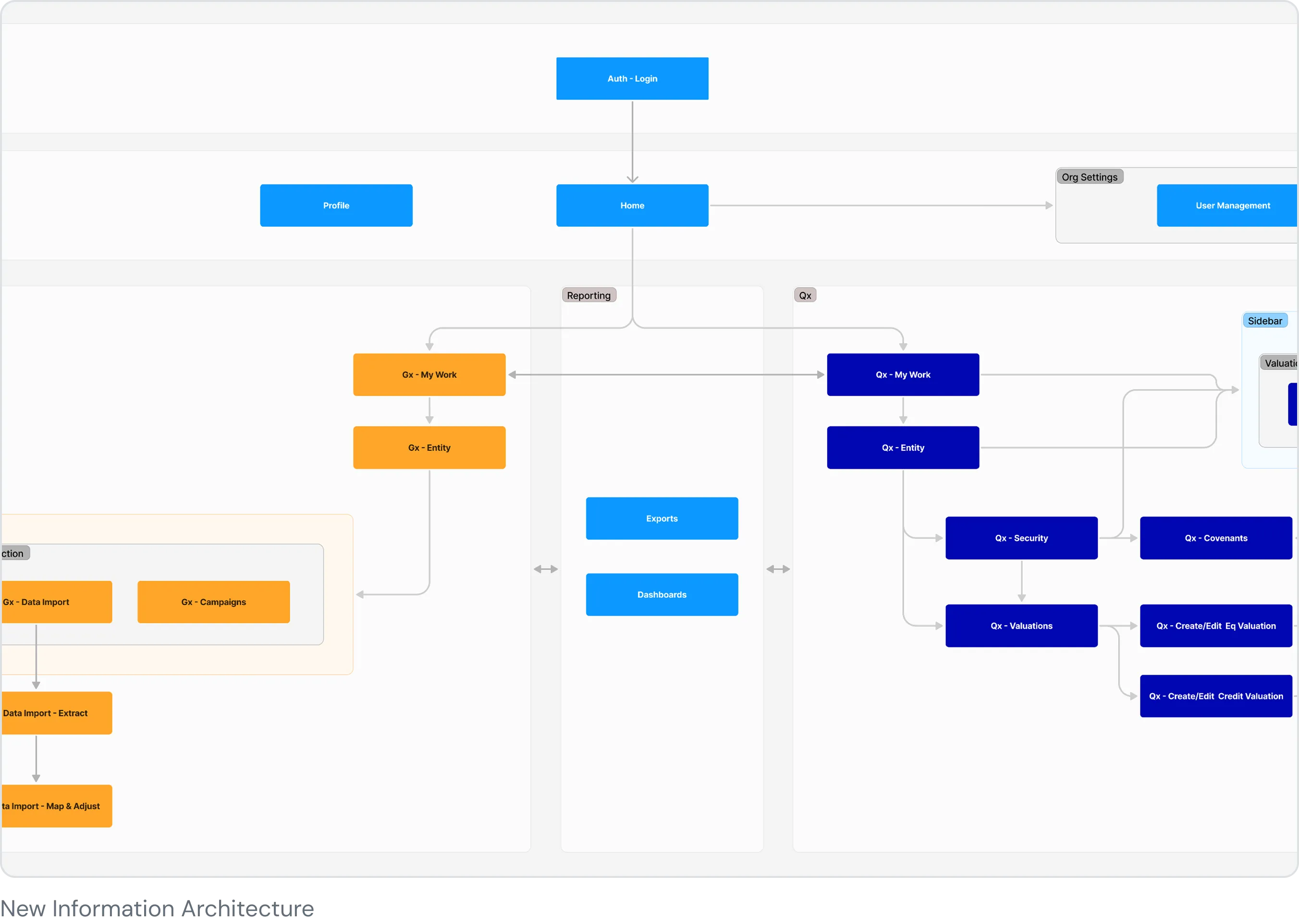
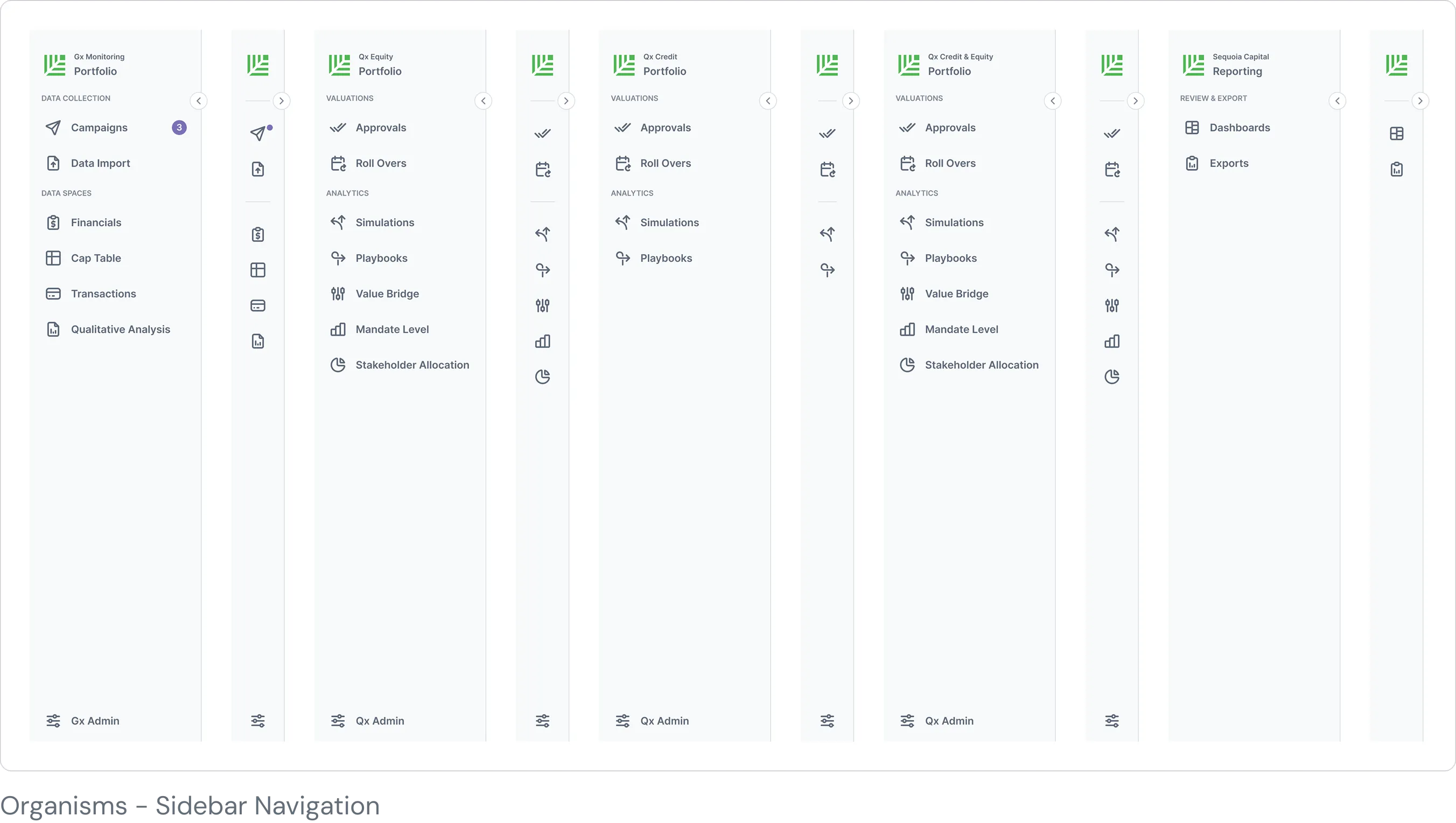
- Information Architecture: Audited existing flows and rebuilt a clearer navigation structure across three product verticals (Valuations, Monitoring, Data Extraction).
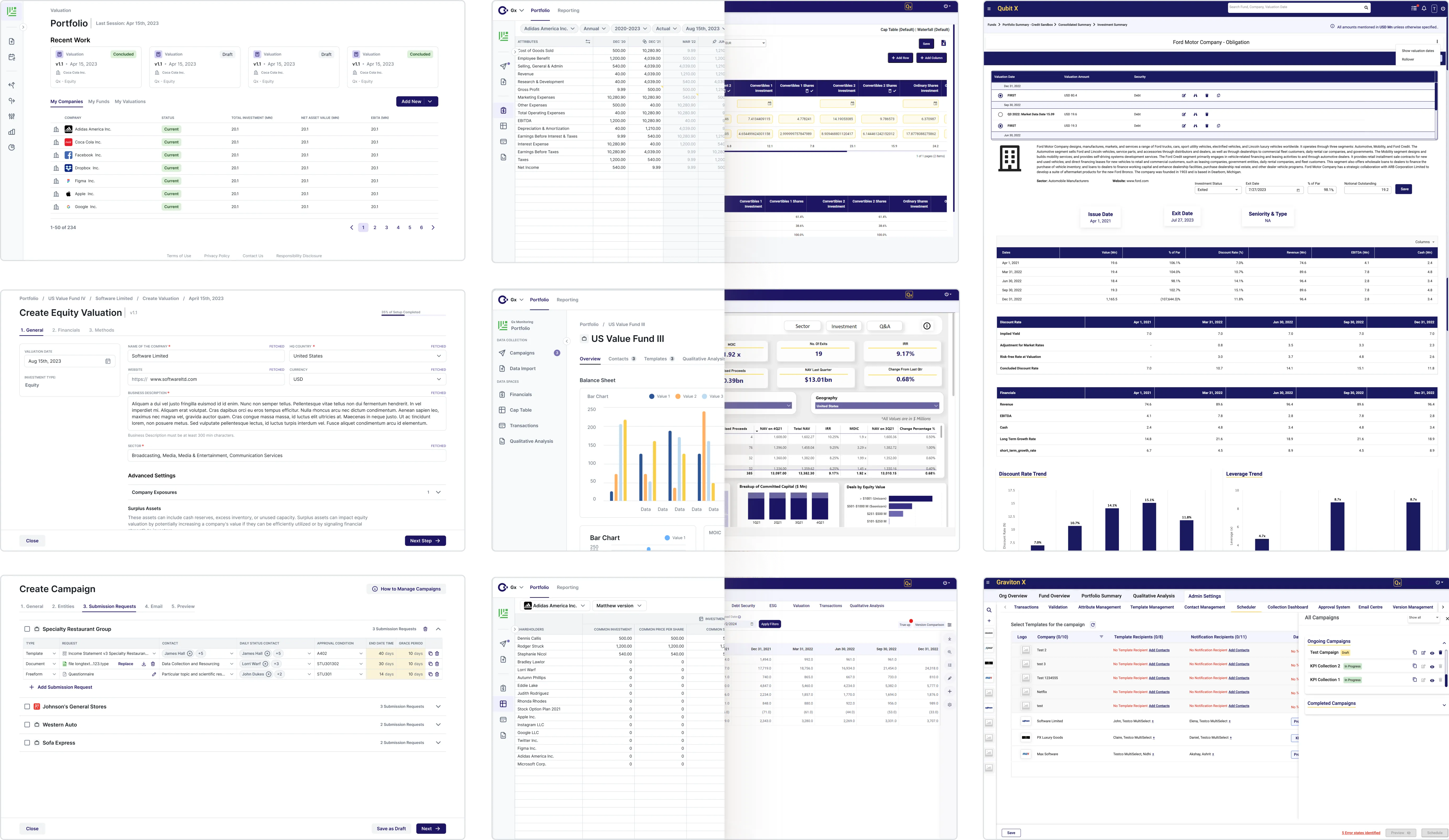
- Workflow Redesign: Designed key flows such as Data Import & Mapping, Cap Table, Valuation Approval, CRUD operations, and Campaign Creation.
- UI Design & Mockups: Delivered over 200 screens covering complex financial processes.
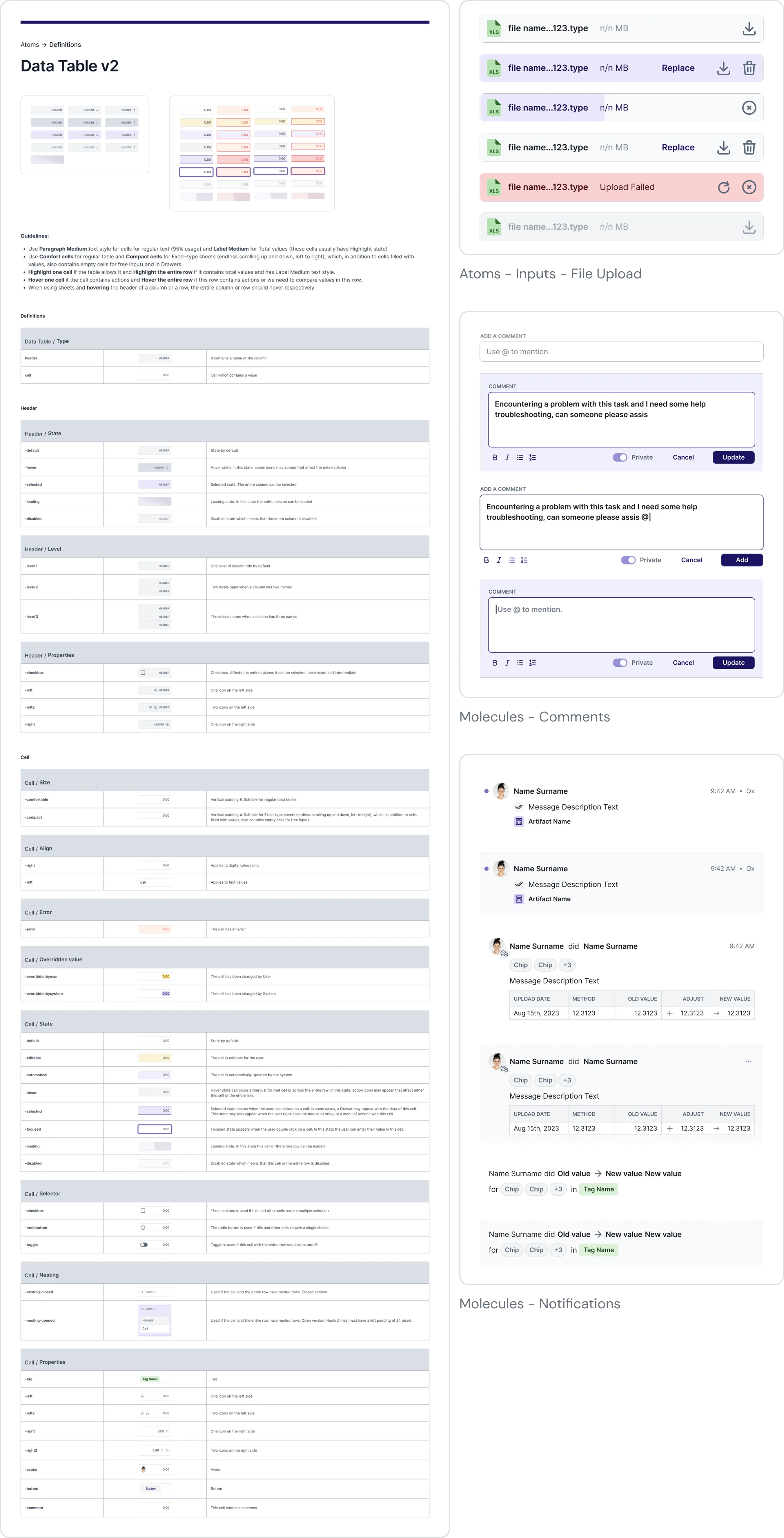
- Design System: Built the foundations of a modular design system (tokens, components, documentation) to unify the experience across products.
- Handoff & Collaboration: Worked closely with front-end engineers via Storybook to ensure consistency between design and implementation.
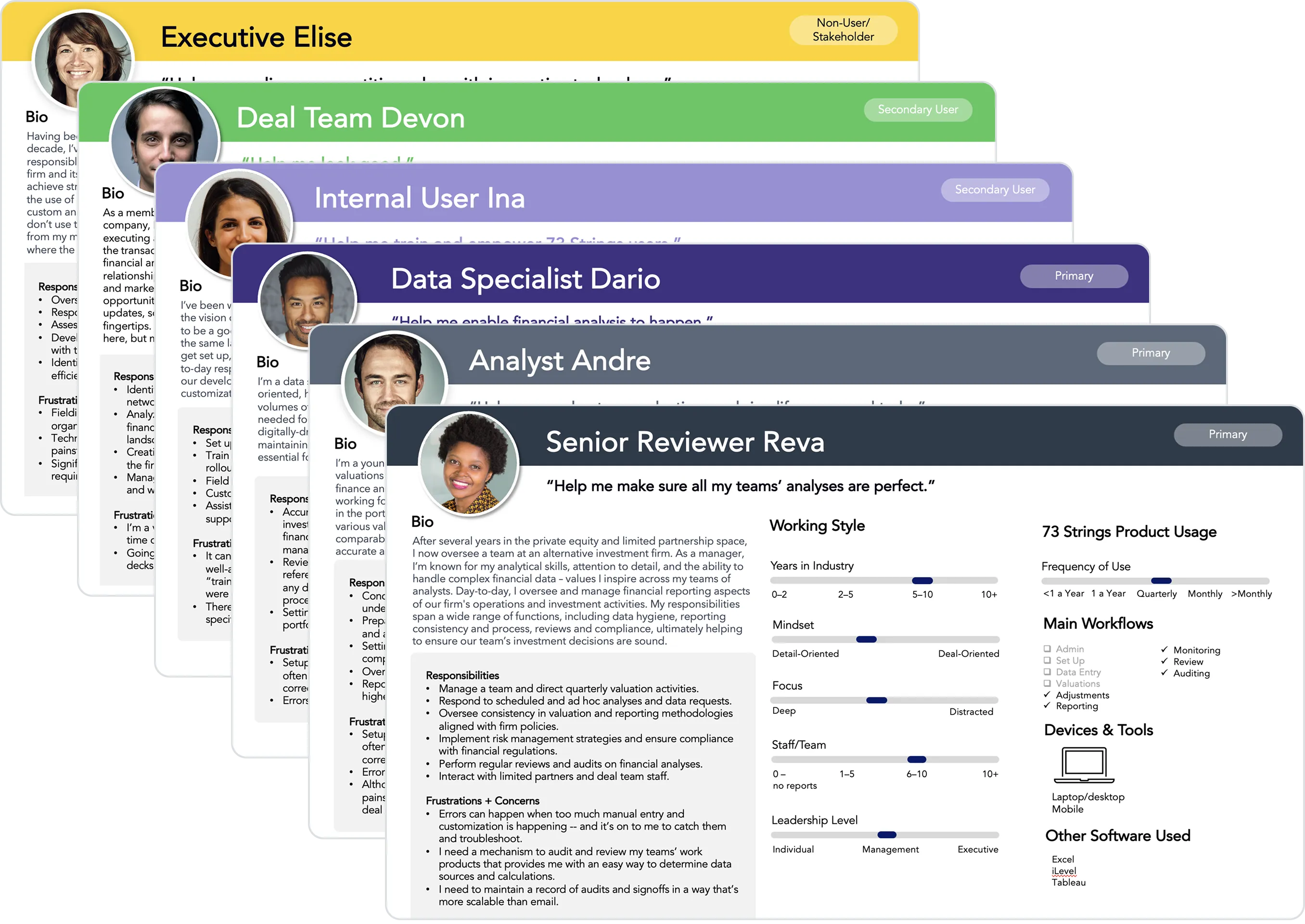
- Fragmented data sources — critical information scattered across spreadsheets and reports.
- Time-intensive processes — manual data entry and reconciliation slowed down analysis.
- Lack of transparency — difficulty comparing portfolio performance consistently across funds.
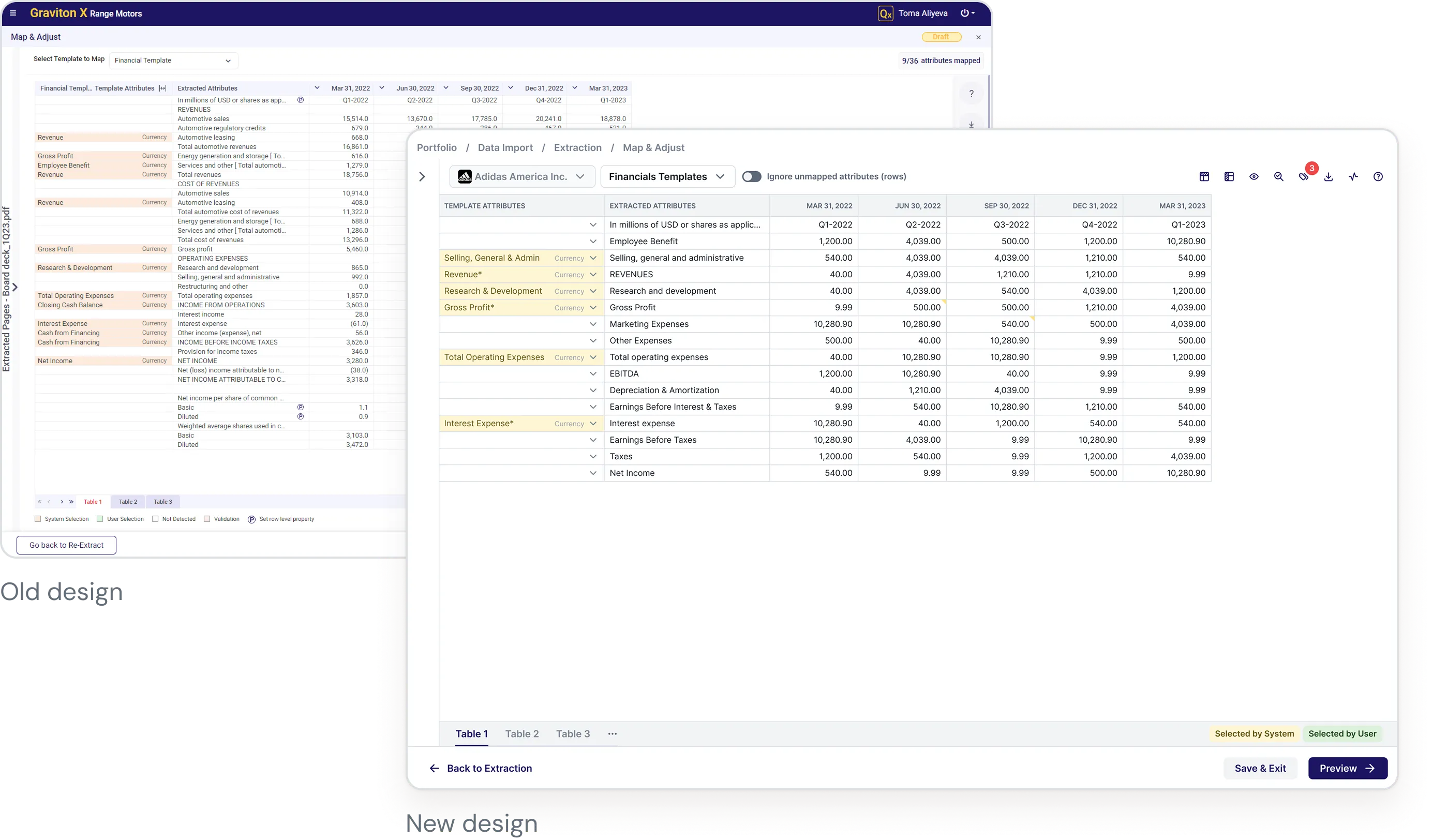
- Data Import (Extraction, Map & Adjust):Simplified a highly technical process by breaking it into clear, guided steps. Users could now extract data, map fields, and adjust values with confidence.
- Financials:Designed modules that allowed users to drill into financial statements, track performance metrics, and compare results across portfolios.
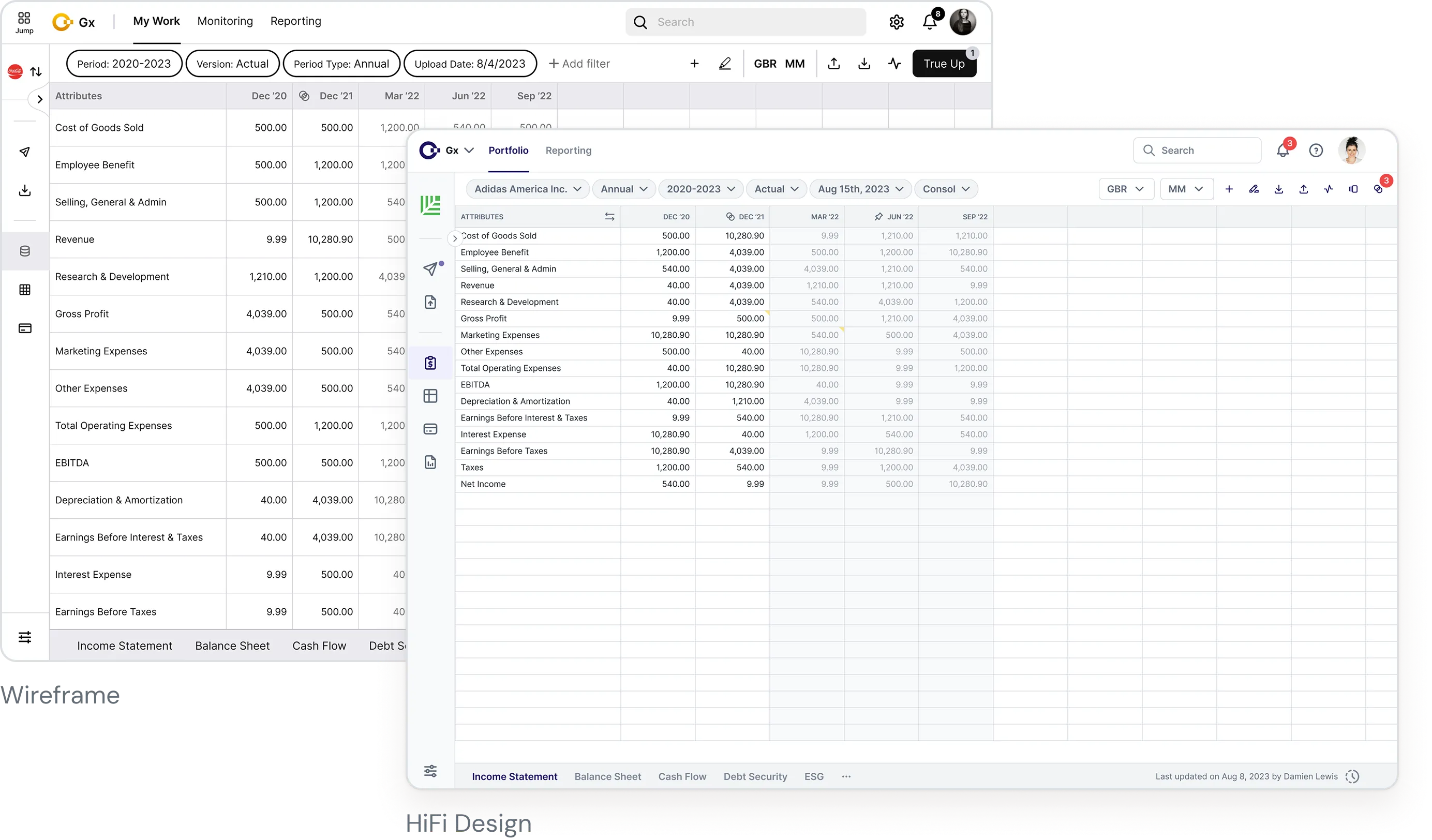
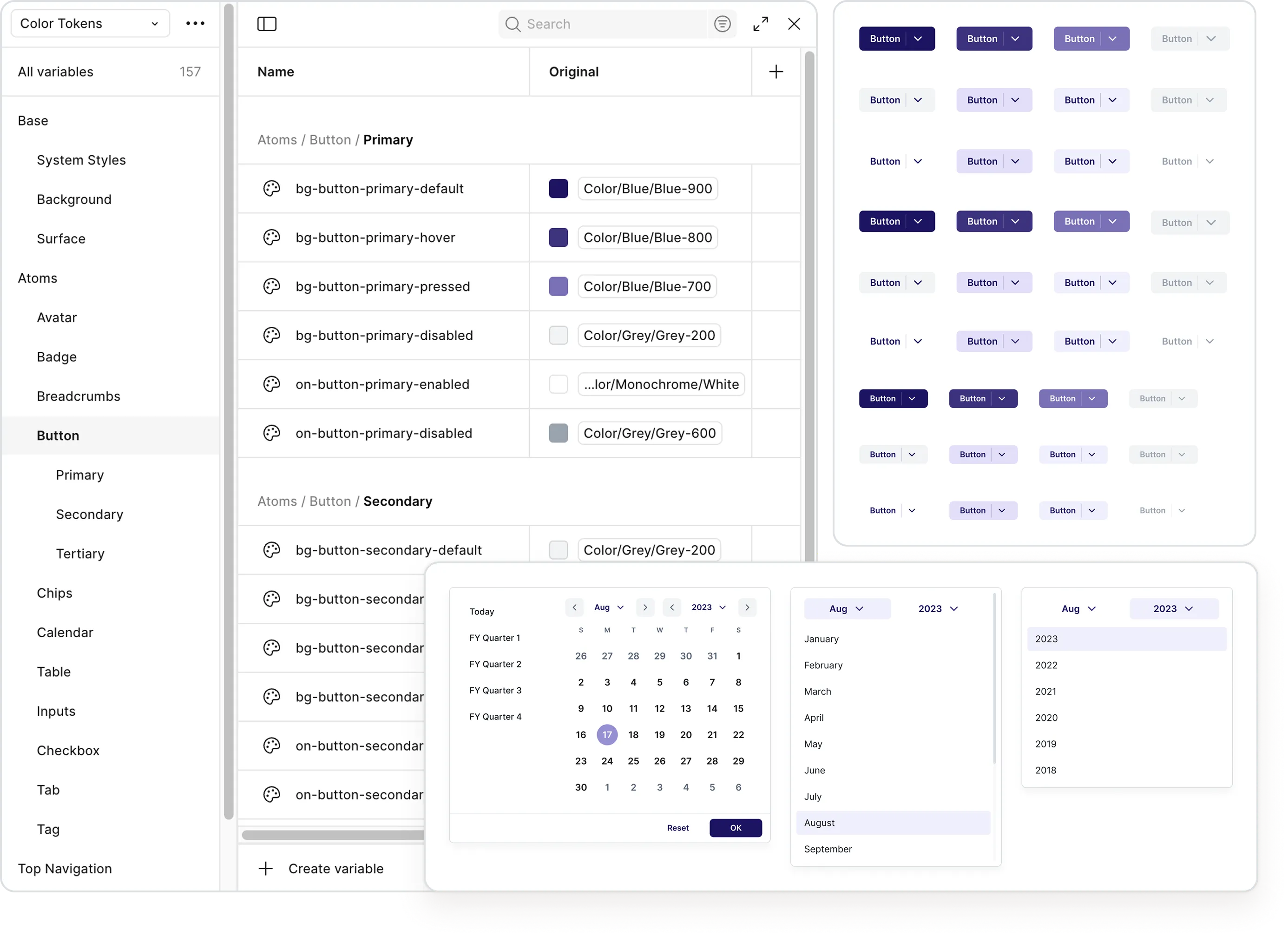
Given the scale of the platform, consistency was critical. I led the creation of a modular design system that defined typography, color, grids, and reusable UI components. This ensured alignment across multiple product modules and accelerated development.
The system also enabled flexibility — new workflows and visualizations could be added without breaking consistency. It became a foundation for scaling the product as the business grew.
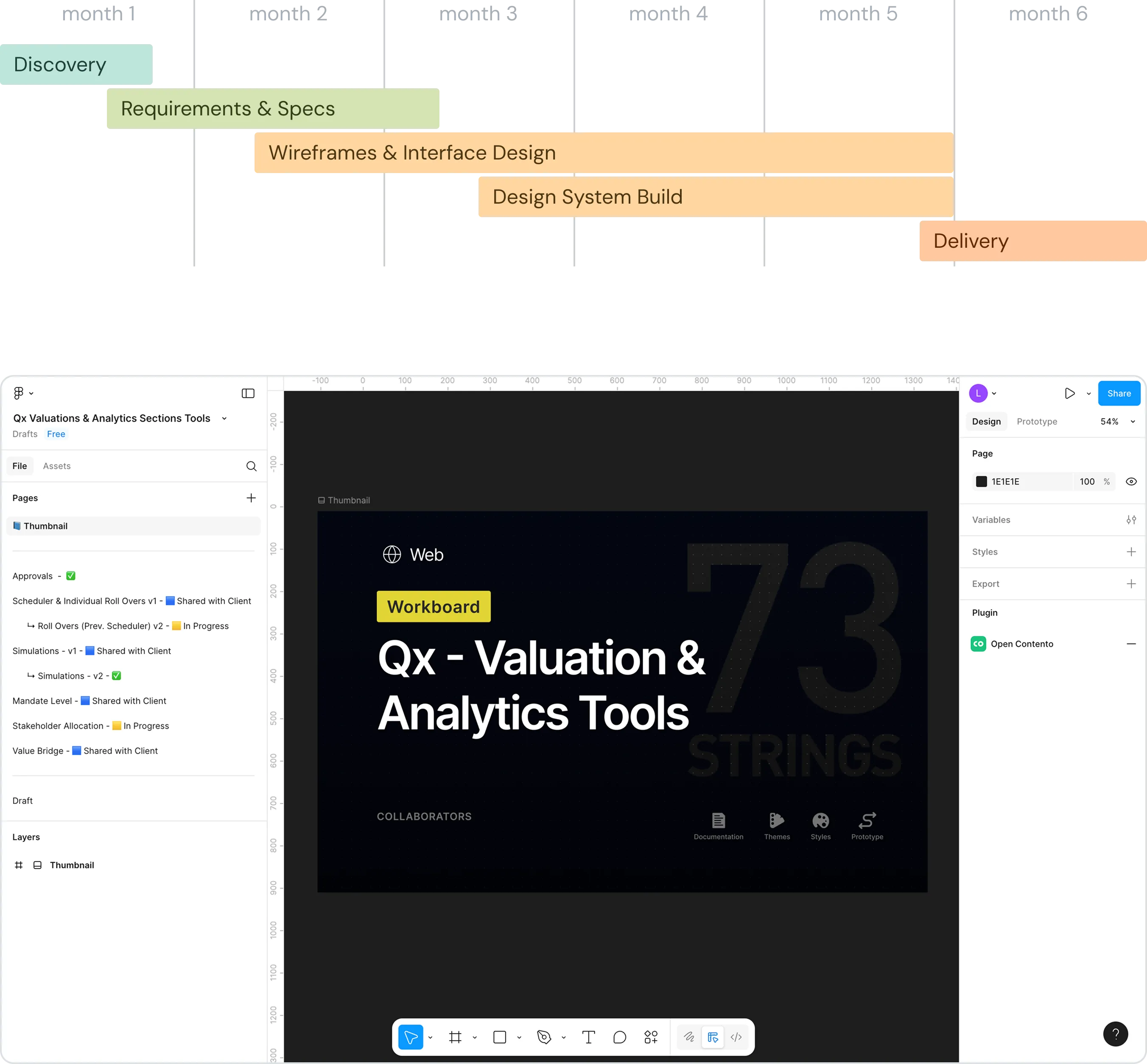
This project required close collaboration across disciplines. I partnered daily with the researcher, product managers, and engineers to ensure alignment from discovery through implementation. We ran design reviews to validate flows, worked in agile sprints to ship incrementally, and continuously iterated based on stakeholder feedback.
My role extended beyond design artifacts — I facilitated discussions to bridge business needs with user goals, and supported engineers with detailed specifications and component documentation to ensure smooth delivery.
- Streamlined data import — reduced errors and cut onboarding time for new funds.
- Improved financial visibility — clear visualizations helped investors compare portfolios with greater confidence.
- Scalable foundation — the design system accelerated new feature development and improved consistency across modules.
This project reinforced the importance of balancing complexity and clarity in enterprise design. I learned how crucial it is to simplify technical workflows without oversimplifying the underlying data.
Another takeaway was the value of a strong partnership with researchers and engineers — translating raw insights into scalable design patterns requires constant dialogue. Building the design system also gave me experience in creating foundations that serve not only today’s needs, but also future growth.